A functional finish is a treatment that adds a performance the base fabric does not have on its own — repelling water, releasing stains, limiting flame spread, wicking sweat, reducing surface bacteria, or removing odours. The same base fabric can behave very differently in real use, depending on which finish is applied and how it is measured.
What a functional finish is
Functional finishing is done in the finishing stage, after dyeing. Chemical finishes are applied as a solution and fixed into the fabric (by curing or washing in). The result is measured with a standard test method, so it can be written into the specification and verified by a test report.
The important point for the buyer: a functional property is only as good as its test method. "Water-repellent" without a grade means nothing — it becomes meaningful once you state the test (for example the spray-test grade), the conditions (before washing, and after N washes), and the acceptance criterion.
The 9 functional finishes Boonchuay Industrial can apply
Boonchuay Industrial applies nine chemical finishes as part of its commission dyeing and finishing service:
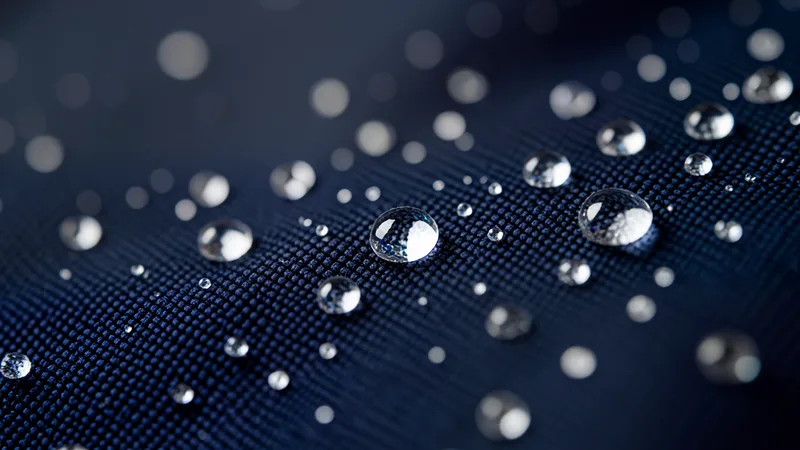
- Water repellent (DWR) — makes water bead on the fabric surface instead of soaking in; used for uniforms, outdoor wear, seating and bags. Tested by the spray test to ISO 4920, graded 0–5.
- Water and oil repellent — repels both water and oil-based liquids; for food-contact and industrial uses.
- Soil release — makes dry and wet stains easier to remove in normal laundering; for uniforms, workwear and hotel textiles.
- Flame retardant — slows ignition and flame spread for workwear and protective uses; behaviour is verified by limited flame spread tests such as ISO 15025.
- Easy care (wrinkle control) — reduces creasing so the fabric needs little or no ironing. Because some traditional easy-care chemistries can release formaldehyde, certified products keep formaldehyde within safe limits (OEKO-TEX Standard 100 sets a formaldehyde limit).
- Moisture management (quick dry) — moves sweat from the skin side to the outer surface where it spreads and evaporates; for sportswear and active wear. Measured by the moisture management test to AATCC 195.
- Anti-mosquito, insect and pollen repellent — reduces contact with insects and airborne dust; for workwear, outdoor gear and hospital or hotel use.
- Anti-bacterial — reduces the number of bacteria on the fabric surface; tested to ISO 20743 — see our deep-dive article on anti-bacterial finishes.
- Deodorant — reduces odour by limiting the growth of odour-causing bacteria; for underwear, activewear and workwear.
Choosing the finish by real use
- Uniforms and workwear — water repellent + soil release is the most common base; add flame retardant where the job involves open flame or hot work
- Hotel and medical — anti-bacterial or deodorant + easy care
- Sport and active wear — quick dry (moisture management), and anti-mosquito for outdoor work
- Seating, curtains and bags — water repellent, plus oil repellent where food contact is possible
- Baby and kidswear — choose finishes covered by OEKO-TEX Standard 100, which applies stricter limits for baby products
- Outdoor and display — water repellent, with light fastness specified as well
How to specify functional finishes in your order
- State the function — the finish name and the real end use, not just "functional"
- State the test method and minimum grade — for example a spray-test grade of 3–4 or higher per ISO 4920, or the minimum antibacterial activity your end customer defines
- State the durability requirement — some functions fade with the number of washes; specify how many washes the function must survive
- Require a test report per lot — using the same method as your spec, before delivery
Testing at Boonchuay Industrial
Boonchuay Industrial is in Nakhon Pathom, has been in commission dyeing and finishing for over 60 years, and runs its own laboratory to test functional performance in the factory — including water repellent testing, plus colour fastness, dimensional stability and tear/tensile strength — to ISO, JIS, AATCC and Daimaru standards, covering domestic and export customers. The factory is certified ISO 9001 and ISO 14001, and its fabrics are OEKO-TEX Standard 100 certified.
Frequently asked questions
How long does water repellency last after washing?
The durability of a DWR finish depends on the chemistry and the use — what you should specify is the spray-test grade after a defined number of washes, and ask for it to be re-tested. Our laboratory can test water repellency before and after laundering.
Can one fabric carry several functions?
Often yes — for example water repellent + quick dry — but the order and compatibility of the finishes affects the final hand and performance, so confirm on a sample before the bulk lot.
Which test reports can I request for a finished fabric?
A report per applied function (for example the spray-test grade, the moisture management indices, the antibacterial activity), plus the usual colour fastness and dimensional stability tests — one report per lot, using the methods stated in your spec.
Is a small trial order possible?
The minimum order quantity is negotiable — send us the fabric and the functions you need via the contact page and we will advise.
Specify the function before the fabric
Functional performance starts in the specification: state the function, the test, the grade and the wash durability, and the mill can match the finish to the real end use. See our dyeing and finishing services or talk to the team on the contact page. For the deep-dive, read anti-bacterial finishes.
References
- ISO 4920:2012 Textile fabrics — Determination of resistance to surface wetting (spray test) — International Organization for Standardization — iso.org
- ISO 20743:2013 Textiles — Determination of antibacterial activity of textile products — International Organization for Standardization — iso.org
- ISO 15025:2016 Protective clothing — Protection against flame — Method of test for limited flame spread — International Organization for Standardization — iso.org
- Liquid Moisture Management (AATCC 195 / MMT) — NC State University, Milliken Textile Protection and Comfort Center — ncsu.edu
- OEKO-TEX Standard 100 (harmful substance limits, including formaldehyde) — OEKO-TEX Association — oeko-tex.com