Short answer: what monk robe fabric is, and what makes it good
Monk robe fabric (chīvara / phā thī) is the cloth for the three robes a Thai bhikkhu wears — the lower wrap (sabong), the upper robe (uttarasāṅga) and the outer wrap (saṅghāṭi) — usually woven from cotton or a cotton-polyester blend (TC), dyed in traditional saffron and maroon tones. Four properties decide quality: fibre, fabric weight, finishing, and colour fastness — because robes are washed regularly.
The three robes
- Sabong (antaravāsaka) — the lower garment, from waist to mid-calf.
- Uttarasāṅga / kāsāya — the upper robe, worn over one shoulder.
- Saṅghāṭi — the outer wrap, used in cool weather or ceremonies.
The "thī" set given as merit is made of these three pieces, which is why temples, sangha-supply shops and robe makers order by the metre or the roll rather than by the piece. The cloth is rectangular and sewn from small strips in rows like a paddy field — the original pattern dating from the Buddha's time.
Traditional robe colours: match the right order
- In the Vinaya, kāsava is cloth dyed with an astringent (dull reddish-yellow) dye; the Buddha allowed six natural dye sources: roots, stems, bark, leaves, flowers and fruit.
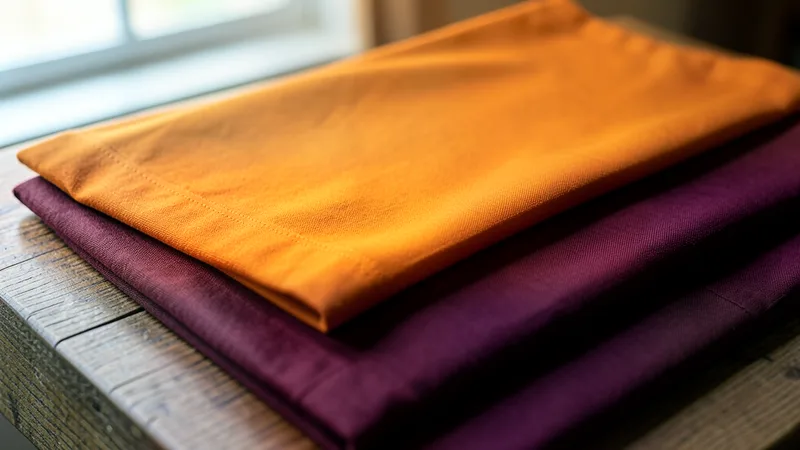
- Chemical dyes are now standard, so robe colour varies by region: bright saffron in Thailand, Cambodia, Laos and Sri Lanka; dark maroon in Myanmar.
- In Thailand today several tones are in use: bright saffron (Mahanikāya), the Royal Colour (Dhammayuttika order, standardised from 2014), jackfruit-heartwood dark brown (forest-monk line) and deep maroon (northern Thudong).
- Buyer's consequence: state the colour reference for the temple or order — "orange" alone is not enough.
The four properties to check before ordering
- Fibre — cotton: breathable and absorbent, comfortable in hot weather; TC: less shrinkage, better shape retention, more durable. The choice depends on the temple's custom and the buyer's needs.
- Fabric weight — top-weight (light) for everyday wear; bottom-weight (heavy) is denser, for ceremonies or hard use.
- Finishing —
- Mercerising: deeper colour take-up and a smoother surface.
- Sanforising: shrinkage control — the robe keeps its length after washing.
- Super-soft calendering: a soft hand that is what wearers notice first.
- Colour fastness — robes are washed often; the colour must not fade, bleed or transfer.
- Ask which dyestuff class is used: cotton dyed with vat dyes achieves high washing, light and chlorine fastness in standard reference tables (ISP-1001).
- Request test results to named standard methods: wash fastness ISO 105-C06 / AATCC 61, light fastness ISO 105-B02 / AATCC 16.3, with the grade stated — different test methods give different grades.
Matching an existing robe exactly
The buyer sends a cutting or a colour reference (for example from the temple or a previous supplier) → the mill matches it on a lab dip → the buyer inspects and approves → bulk dyeing starts. This prevents "different oranges" across repeat orders.
Checklist before ordering monk robe fabric
- State the fibre (cotton or TC) and the weight (top or bottom).
- State the colour reference for the temple/order and approve the lab dip before production.
- Check fastness results: named test method + grade (wash, light, rub).
- Finishing: mercerising + sanforising + soft calendering.
- Cloth dimensions: width and length to the cutting pattern.
- Minimum quantity: negotiable, agreed to the quality required.
- Certification such as OEKO-TEX Standard 100, if the temple or buyer asks for it.
At BCI: woven and dyed within the same group
Boonchuay Industrial (BCI) in Sam Phran, Nakhon Pathom, has over 60 years of dyeing and finishing experience and produces monk-robe and temple cloth in top and bottom weights, in the customary saffron and earth colours, dyed to a temple or retailer reference. The cloth is mercerised, sanforised and super-soft calendered, under the BCF, Golden Bridge and Glass Bridge brands — sold retail by the metre and wholesale by the roll from the Sam Phran mill or the Sampeng sales office in Bangkok, and exported to Myanmar and Cambodia. Every lot is dyed against an approved lab dip and tested in the in-house laboratory before release. See all monk robe and temple fabrics and contact the sales team.
FAQ
Q: How many pieces are in a thī (monk robe set)? A: Three — the sabong (lower wrap), the uttarasāṅga (upper robe) and the saṅghāṭi (outer wrap). The cloth itself comes in light and heavy weights, in the colours of each order.
Q: How do robe colours differ between orders? A: Mahanikāya monks wear bright saffron; the Dhammayuttika order standardised the Royal Colour in 2014; forest-line monks use jackfruit-heartwood brown; northern Thudong monks often wear deep maroon. Send the reference from the temple concerned.
Q: Can you dye to match an existing robe? A: Yes — send a cutting or the colour reference; the mill matches it on a lab dip for approval before bulk dyeing.
Q: How do I know the colour will really survive washing? A: Ask for test results to a named standard method — for example wash fastness ISO 105-C06 / AATCC 61 — with the grade, and ask which dyestuff class is used. Vat-dyed cotton gives the highest fastness ratings.
Q: Can I buy by the metre, and do you make to order for a temple or shop? A: Both — retail by the metre, wholesale by the roll, and make-to-order for specific colours, widths and weights (minimum quantity is negotiable).
References
- A Study of the Colours of Robes of the Theravada Sangha in Thailand, Thammasat University
- Development of Monastic Robe (Cīvara) in The Buddha's Time, Journal of Iab (TCI ThaiJO)
- The Robe in Buddhist Scriptures: Its Development Through Social & Cultural Contexts, Mahachulalongkornrajavidyalaya University
- ISP-1001 Colorfastness of Cotton Textiles, Cotton Incorporated
- AATCC Standard Test Methods (AATCC 61 wash fastness, AATCC 16.3 light fastness), AATCC