Short answer: pick the fabric for the job, not the price
An expensive fabric does not always win — the fibres must match what the garment has to do. Pure cotton gives the best hand feel and comfort of all, but TC and TR bring different strengths in durability and care. Choosing well therefore starts with three questions: what is the fabric for, how often will it be washed, and how many years should it keep working. In the fabric trade, the fabric type — cotton, TC or TR — is the first item that should be written into the specification before price is ever discussed.
The fabrics you should know before ordering: cotton, TC and TR
Before deciding, understand the basic character of each fibre, because it determines how the finished fabric behaves when worn and when washed. The trade also constantly uses the abbreviations TC and TR, so knowing what they mean lets you communicate with suppliers and mills with confidence.
- Cotton — a natural fibre spun from cotton bolls; it has excellent flexibility and moisture absorbency, feels cool, does not irritate skin, and suits work that values hand feel, comfort and a premium image.
- TC (cotton-polyester blend) — combines a natural fibre with a synthetic, so you get cotton's comfort and breathability together with polyester's durability and dimensional stability; it wrinkles less and dries faster after washing.
- TR (rayon-polyester blend) — rayon is a cellulose fibre with a soft, smooth hand. Blended with polyester it gives a uniform fabric that is softer, smoother and more comfortable than TC. The TR that BCI dyes is mainly heavier-weight uniform cloth, usually heavier than TC. The trade-off: rayon loses strength when wet, more than cotton does, so TR can be a little less durable than TC under heavy washing.
The naming of these blends follows a simple logic: the letters are abbreviations of the fibres, with the fibre that "defines" the fabric listed first. When a buyer sees TC, they immediately know it is a cotton-polyester blend. Reading these names makes ordering and specification much more precise. The chemistry worth knowing: cotton and rayon are hydrophilic cellulose fibres that absorb sweat and moisture well, while polyester is a synthetic that does not absorb water but dries quickly and holds its shape. That chemical and physical difference is exactly why blending fibres is the heart of the fabric industry, and why there is a blend that genuinely covers every job.
Real-world behaviour: absorbency, creasing and shrinkage
Once the fabric is cut, sewn and put into daily use, these behaviours decide whether the wearer is satisfied — and they should be tested on real samples before bulk ordering.
- Absorbency and drying time — cotton absorbs the most water but dries slowly, because the moisture has to evaporate entirely from the fibre; outdoor, factory or humid work often needs faster-drying fibres in the blend so the fabric does not feel damp or stuffy through the day.
- Creasing — cotton and rayon wrinkle easily after washing and after long wearing; polyester helps the fabric hold its shape and dramatically reduces ironing, which is the main reason TC and TR dominate uniform programmes that staff wear every day.
- Shrinkage — cotton shrinks more than blended fabrics because cellulose fibres react to heat and water in the wash; shrinkage after laundering can be measured against international standards, such as AATCC and ISO dimensional-change test methods, which mills use to verify fabric before delivery.
- Strength and wash durability — polyester resists tensile force and abrasion better than natural fibres, so work that involves heavy washing, frequent laundering or years of continuous use usually includes it in the blend to protect the fabric.
- Dyeing and colour fastness — cotton and rayon are dyed with dyes that bond chemically to cellulose fibres, such as reactive and vat dyes (vat dyes give the most durable colour on cotton, and vat dyeing is a BCI speciality), while polyester needs high heat for the dye to penetrate the fibre, such as disperse dyes. The same colour on two different fabrics therefore goes through different dyeing routes, and when comparing colours across fabric types, always verify with the same test methods — fastness to washing, light and rubbing.
- Blends need real dyeing expertise — each fibre in a blend takes a different dye and a different process: polyester needs disperse dyes at high temperature, while cotton and rayon need reactive or vat dyes. In a TC or TR the mill has to dye both fibres and make them match as one even, solid shade, and blends with spandex need careful heat control so the stretch is not damaged. The more kinds of fibre in the blend, the more technique and experience it takes, so choose a mill with deep experience in blended fabrics.
Remember: there is no single "best" fabric — only the right one for the job. State the behaviour you need in your specification, such as sweat-wicking, low wrinkling or minimal shrinkage, and let the mill help choose the structure and fibres that deliver it.
The real cost drivers (without the numbers)
Fabric price is not set by "fabric type" alone, but by several understandable factors working together.
- Fibre type and ratio — the proportion of each fibre drives base cost directly; work that demands cotton-dominant behaviour costs more than work built around synthetic fibres.
- Fabric construction — the same weave in a coarse or a fine yarn structure, or at a different weight, can cost very differently.
- Finishing — post-dyeing steps such as calendering, anti-wrinkle, water repellency or any special function add cost depending on the chemicals used and the processing time.
- Batch size and dyeing route — cost depends mainly on the batch size of each colour, not simply on how many colours you order. BCI runs both batch (jet) and continuous dyeing, so each colour goes to the route that suits its volume, from smaller lots to long runs.
- Colour consistency across colours and lots — more colours do not have to mean less consistent colour. With an in-house colour lab and lab-dip approval for every shade, BCI keeps each colour consistent from lot to lot. This is where mills with less colour control can struggle, so ask any mill how it keeps shade consistent across repeat lots.
The best practice is to ask the mill for a quotation broken down by fabric type and function, so you can see exactly where the cost sits and decide from what you actually receive, not just the number on paper (read more: how to write a fabric spec sheet).
Choosing the fabric for each end use
Once you understand each fabric's behaviour, matching fabric to job becomes much easier.
- Office uniforms and staff wear — TC or TR. TC for easy care and wash durability; TR when a softer, smoother, more comfortable feel is wanted. Both keep a tidy image with little ironing for uniforms worn and washed every day.
- Industrial workwear — TC or TR, chosen by the work: TC where heavy, frequent washing and abrasion come first, TR where all-day comfort matters more; optionally with added functions such as anti-bacterial or anti-static treatment depending on the work and environment.
- Baby, kids and maternity wear — cotton, bamboo or Tencel™, because they are gentle on skin, soft and absorb sweat well — important for sensitive bodies that change clothes often.
- Formal wear, hotel uniforms and service staff wear — TC or TR. TR for a softer, smoother, more comfortable feel in a heavier cloth that keeps a tidy appearance all day; TC where easy care and frequent washing come first.
- Monk robe fabrics — cotton or TC: cotton for a natural, soft hand, TC for easy care and wash durability; often in auspicious deep colours.
- Automotive textiles — mostly polyester, chosen by function: durability, colourfastness to light and, where required, flame retardancy.
- Home textiles — for items that do not touch the skin, such as curtains, mostly polyester; for items that touch the body, such as bed linen and towels, a blend or 100% natural fibre such as cotton.
Once the job is clear, state three things in the spec: fabric weight (GSM), construction and colour, and the required functions — then request a real swatch with a test report before bulk production.
How to request samples and test reports from a mill
Bulk fabric orders usually start with samples, and here is the standard process a first-time buyer should know.
- Step 1: send the spec — state fibre type, construction, GSM, colour, functions and an approximate quantity.
- Step 2: request a Lab Dip — a colour sample dyed in the laboratory, so the colour can be approved first; lab dyeing is faster and cheaper than dyeing bulk fabric.
- Step 3: request a swatch and test report — a real sample cut from fabric produced to your spec; the mill tests colour, weight, width, shrinkage and hand, and issues a report.
- Step 4: approve the standard — once the standard sample and report are approved, the mill produces the bulk to the same standard and compares shade against it at every production stage.
This process protects both sides: the buyer knows exactly what they will receive, and the mill knows exactly what is expected.
Common mistakes on a first fabric order
- Specifying colour only, not behaviour — saying "I want navy" is not enough; state GSM, construction and the required functions too.
- Comparing price alone, not function — fabrics that look alike but differ in GSM and fibre content can price very differently; compare on "function + construction".
- Ordering bulk without testing — always start with a sample, have it tested to a named standard method, and check it in real use before bulk ordering.
- Not keeping the standard sample — once approved, store the standard sample safely; it is your colour and hand reference for all following orders.
Knowing these mistakes saves both money and time, especially for buyers ordering from overseas mills for the first time.
Tips that help you pick the right blend
Choosing the right blend comes down to a few practical habits every buyer can use.
- Always handle real samples — specs and photos cannot tell you the whole story about hand feel.
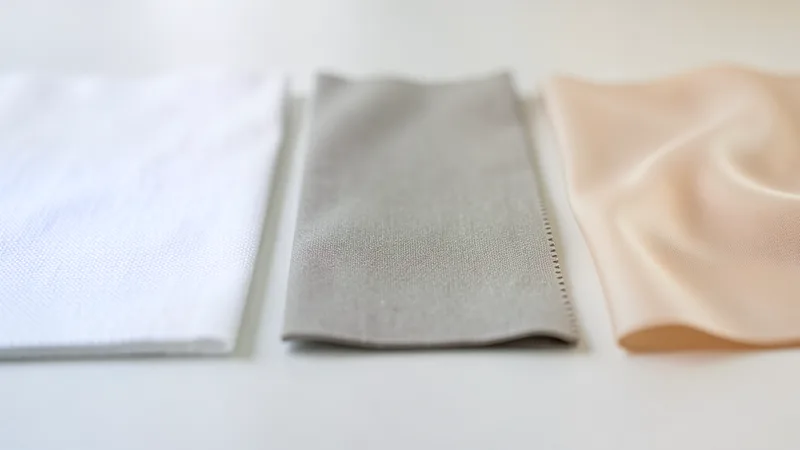
- Compare fabrics side by side — cotton, TC and TR look clearly different when placed next to each other.
- Test to a standard method before ordering — have the sample tested for colour fastness to washing and for shrinkage using a named standard method, for example ISO 105-C06 or AATCC 61 for wash fastness and ISO 6330 / ISO 5077 or AATCC 135 for shrinkage. The same fabric can get a different fastness grade under a different or home wash method, so naming the method means buyer and mill read the same result.
- Ask the mill to help choose — a mill with decades of commission dyeing experience can point you the right way and save a lot of time.
- Keep records every time — note the fabric type, colour and test results so you can compare them in the next order.
These five habits work for every kind of job and make your blending decisions more evidence-based.
Summary: five steps to picking the right fabric for your job
- Step 1: define the job — what will the fabric be used for, how often will it be worn and washed, and how long must it last?
- Step 2: choose the fibres — cotton, TC or TR, according to the behaviour you need.
- Step 3: write a clear spec — fibre content, construction, GSM, colour and functions.
- Step 4: test the samples — Lab Dip, real swatch and a test report.
- Step 5: store the standard — keep the approved standard sample as your reference for every future order.
Following all five steps helps you choose fabric that truly fits the job and delivers real value for the budget you have set.
A dyeing and finishing mill that handles all of these fibres
Boonchuay Industrial (BCI) is a commission dyeing and finishing mill in Nakhon Pathom with over 60 years in commission dyeing and finishing. It handles a wide range of fibres on commission — from TC, TR, RT, cotton (including cotton + spandex), polyester, rayon, Tencel, Modal, Cupro and nylon to recycled yarns — so it can genuinely help you choose a fabric construction that fits your job, and the team is ready to advise you from fibre selection all the way to delivery of tested, verified fabric.
If you are comparing several fabrics, or want a test sample for your own production, you can contact the BCI team directly.
FAQ
Q: How is TC different from pure cotton? A: Pure cotton has the best hand feel and comfort, but TC is stronger, wrinkles less and is easier to wash — which is why many uniform programmes choose TC for the best balance of quality, care and cost.
Q: Should I choose TR or TC? A: If durability under heavy, frequent washing comes first, TC is the safer choice. If comfort comes first, TR is softer and smoother to wear; the TR that BCI dyes is also generally heavier than its TC. Rayon is weaker when wet than cotton, so TR can be a little less durable. Choose by the look, comfort and wash conditions of your job.
Q: Can a blended fabric absorb sweat as well as cotton? A: It depends on the fibre ratio — the more cellulose fibre (cotton or rayon) in the blend, the better the absorbency. For work that needs high sweat management, fix the fibre ratio clearly in the specification from the start, and test real absorbency on a fabric sample before deciding.
Q: What should I include in my fabric specification? A: State the fibre content, construction, fabric weight (GSM), colour or dyeing method, required functions and an approximate quantity — then request an approved Lab Dip and a test report before bulk production. The more complete your spec is, the more precisely the mill can suggest options and pricing (read more: fabric spec sheet).